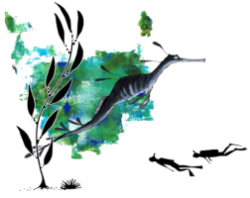
:: International Underwater Clean up Day - September 2008

Saturday the 21st of September was 'International Underwater Clean up Day' for 2008. A global initiative, organised by the Project AWARE team, which included divers from around the world all diving deep in an effort to clean up our waterways.

A total of 12 divers from both the TUDC and TSDC teamed together and dived around Kings Pier and Contituition Dock, hauling in just under half a tonne of trash and waste from our waterways. Great media coverage and assistance from the Department of Environment enabled us to get our message out to the greater community that 'prevention is far better than the cure'. Seeing that we pulled out under 5% of the actual waste that is under the surface around the port region.

A big thanks goes to the 'Hobart Dive Shop' on Argyle St for helping us out with dive supplies on the day.

We look forward to increasing the numbers on next year's dive, but in the meantime check out our club photo gallery to the right on the weekends diving.


:: Abalone virus found in Tasmanian fisheries

The Department of Primary Industry and Water have recently released a press release outlining a suspect case of Abalone Viral Ganglioneuritis (AVG) that has been found in a processing plant here in southern Tasmania. The following is an excerpt from the DPIW from September 22nd. For a full update and current no-go zones, please visit http://www.dpiw.tas.gov.au/:

Live abalone in a processing facility in southern Tasmania were submitted to the Mount Pleasant Laboratories on the 3 September 2008 showing signs of 'hard fish' (ie stiffness of the muscle and mantle). The abalone were from block 23B (south of Maria Island) and 14B (near Southport). The clinically affected fish were from 2 blocks, however histopathology signs consistent with AVG were seen in fish from block 23B but not 14B. PCR tests conducted in the Australian Animal Health Laboratory in Geelong have confirmed AVG in one of the Maria Island specimens and both of the Southport specimens.

Controls have been put in place on the infected premises, and de-stocking of abalone has been completed. A decontamination plan has been developed and approved.

An order under the Animal Health Act 1995 to help prevent the spread of the disease was signed by the Chief Veterinary Officer. The order creates regions in which abalone must be caught and landed. A permit can be issued for premises to receive stock outside their region. These permits will be assessed with respect to biosecurity risk.

Samples of wild abalone from the southern D'Entrecasteaux were tested by the Australian Animal Health Laboratories in Geelong and of 83 samples tested, one returned a positive PCR result.

Following the detection in the wild, the Chief Veterinary Officer put in place a restricted area under the Animal Health Act 1995 restricting commercial and recreational fishing in the southern D'Entrecasteaux.

The relevant areas are blocks 14A, 14B, 14C and 14D. All diving equipment used in this area must be treated in accordance with the Procedures to Minimise the Risk of Transferring Aquatic Diseases through Diving and Fishing (available on the DPIW internet site). All restrictions are subject to review based on test results obtained.

Abalone fish continue are sampled using dive teams, processor sample collections, and submitted abalone fish. Thus far, 360 samples from 16 sites have been tested and there has only been one positive PCR result from one fish. This fish was sourced from Block 14B.

If you have any queries about AVG, you can contact Barry Calderbank from the Biosecurity and Product Integrity division of DPIW Hobart on (03)6233 6519.


:: So what is marine conservation all about?

Marine conservation is everyone's job. The oceans are our lifeblood and our survival depends on their existence. If we step back and look at the whole marine ecosystem, we will see that the extinction of one species can have a detrimental effect on many, many others and in some cases our negative influence and irresponsibility can indirectly cause the extinction of another. Big on the radar at the moment are our Whale populations and the dramatic effect that the Japanese whalers are having on moving many species closer to extinction. The increase of Shark catches worldwide with particular attention to the cruel actions of finning that occurs out at sea, and throwing the rest of the animal (most of the time still alive) back into the ocean to die is also of great concern.

However, it isn't just these high visibility worldwide conservation projects that make a difference. Many projects, such as the Sea Urchin research that the Uni Dive Club is participating in this year can make a huge difference in the preservation of the beautiful underwater world that surrounds our state.

Stay tuned for more detail on how we are helping out with this great initiative.

:: Current Project Involvement

The TUDC is helping undertake sub-tidal reef monitoring tasks as part of a study into the effect of urchin barrens on our reef systems. Check out the urchin website here.